Every time you walk into a room, your child becomes tense at the sound of your voice. Their shoulders tighten before you even finish your sentence. Maybe they blink hard, step back, or flinch when your hand moves too quickly. They may not be trying to be dramatic. Their body may simply be doing what it has learned to do; prepare for danger. The danger is the possibility of you yelling at them again.
When a child is yelled at over and over, home can stop feeling like a safe place to be. The child may begin to listen for tone before words, scan faces before speaking, and brace for the next outburst even during quiet moments. Constant yelling teaches the nervous system to stay on alert. It can make a child feel unsafe, unwanted, or like they are always one mistake away from trouble.
Everyone loses patience sometimes. A tired parent may raise their voice and later wish they had handled it differently. This article is not about one rough moment. It is about a repeated pattern of yelling, screaming, threatening, shaming, or using a loud voice to control a child. Over time, that pattern can leave marks that are not always visible but are deeply felt.
What Can Constant Yelling Do to a Child?
Children learn their self-worth from how the adults around them interact or respond to them. When the response is often loud, harsh, or frightening, the message a child may hear is, “I am bad,” “I am too much,” “I’m in the way,” or “I am not safe.” Even when the parent’s intention is discipline, the child may experience it as rejection.
This can chip away at their self-esteem. A child who is constantly yelled at may become anxious, overly apologetic, quiet, angry, or eager to please. Some children shut down. Some talk back. Some become aggressive because loudness is the communication style they know best. Underneath those behaviors is a child trying to cope with fear, confusion, or shame.
Research on childhood verbal abuse has linked repeated shouting, belittling, and threatening language with long-term emotional and behavioral harm, including higher risks of anger, depression, substance misuse, self-harm, and problems with well-being later in life.
How Does Yelling Affect the Developing Brain?
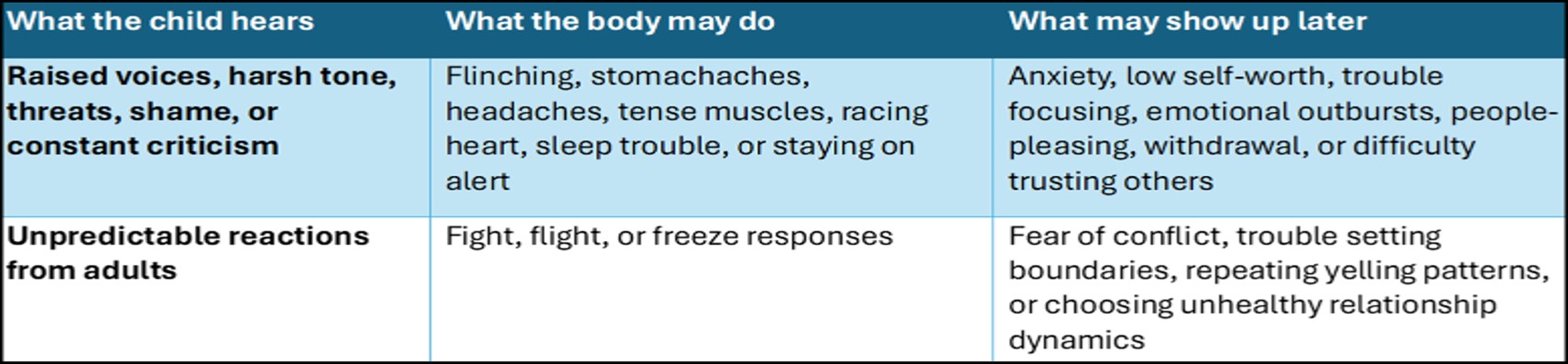
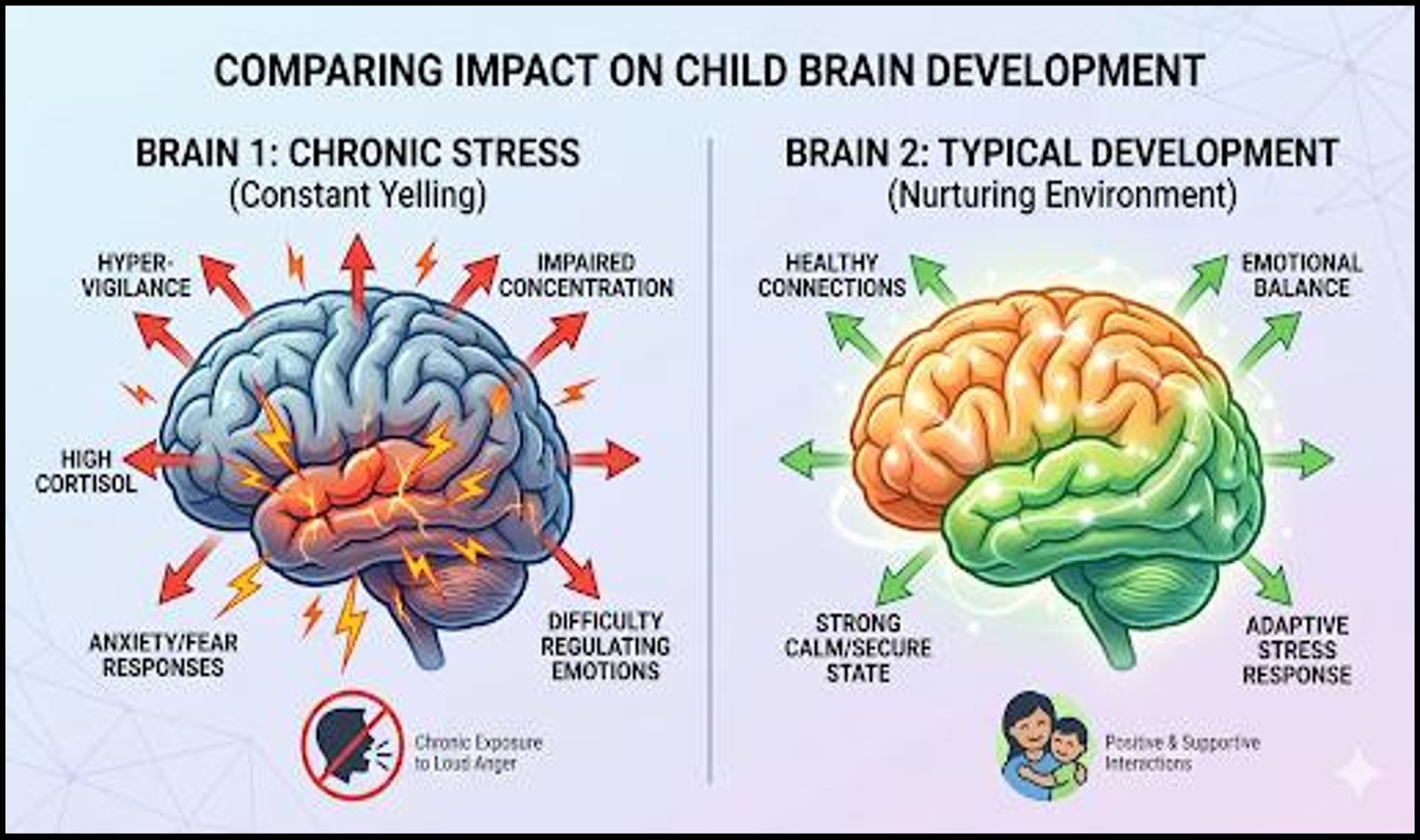 Because a child’s brain isn’t fully developed, constant trauma can have a lifelong effect. It is shaped by repeated experiences, especially those involving safety, fear, comfort, or threat. When a child hears constant yelling towards them, the brain may treat it like danger. The amygdala, which helps detect threats, can become more reactive. Stress hormones such as cortisol and adrenaline can rise. The body may move into fight, flight, or freeze mode.
When this happens often, the brain can start prioritizing survival over learning. The child may have trouble concentrating, remembering instructions, solving problems, or calming down after conflict. The prefrontal cortex, which supports reasoning, impulse control, and decision-making, works best when a child feels safe. A child who is bracing for the next explosion may not have much energy left for curiosity, creativity, or schoolwork.
This does not mean a child is ruined. Children can heal, and the brain can change when the environment becomes safer and more nurturing. But it does mean that adults should take chronic yelling seriously. It is not just “noise.” For a child, it can become the sound of threat.
A Simple Visual: The Effects of Constant Yelling
How Can Yelling At A Child Shape Future Relationships?
Children often carry early relationship patterns into later friendships, dating relationships, work relationships, and parenting. If love came with yelling, they may grow up believing closeness includes fear. They may become uncomfortable with calm because unpredictability feels more familiar. They may avoid conflict completely, apologize when they have done nothing wrong, or stay in unhealthy relationships because walking on eggshells feels normal.
Some children repeat what they learned. They may yell when they feel powerless because yelling was modeled as the way to be heard. Others may become highly sensitive to tone, shutting down the moment someone sounds disappointed. In both cases, the past can shape how safe they feel with people in the present.
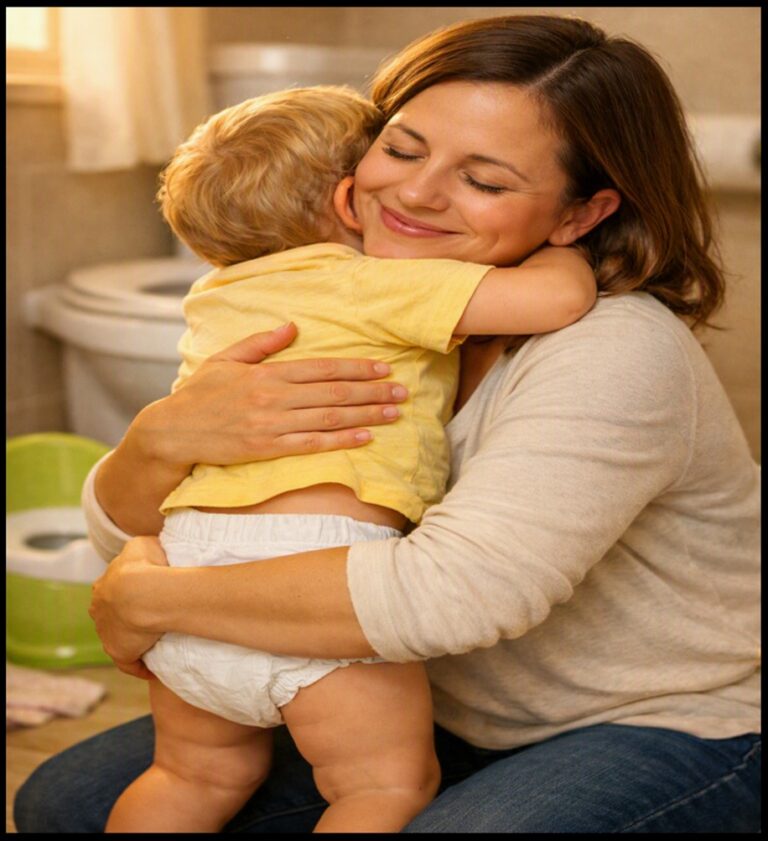
The hopeful part is that patterns can change. Safe adults, therapy, self-awareness, repair after conflict, and gentle communication can help a child learn that love does not have to be loud to be strong.
What To Do Instead of Yelling
Breaking the yelling cycle takes practice, not perfection. The goal is not to become a parent who never feels frustrated. The goal is to become an adult who notices the frustration early and chooses a calmer way through it.
- Pause before you respond. Take one slow breath before speaking. If you can, take three. A short pause gives your body time to come down from the rush of anger, so your words do not do more damage than the original problem.
- Lower your voice on purpose. A steady, quieter voice helps bring the room down. You can still be firm without being frightening. Children usually hear better when they are not scared.
- Name the feeling, then set the limit. Try saying, “I see you are upset. I will not let you hit,” or “You are angry”, and “The answer is still no.” This helps the child feel seen while still making the boundary clear.
- Correct the behavior, not the child’s worth. Focus on what happened, not who the child is. Say, “The toys need to be picked up,” instead of “You are so lazy.” A child can fix a behavior. They should not have to recover from being labeled.
- Step away if you are too heated. If everyone is safe, say, “I need a minute to calm down. I will come back, and we will talk.” This models self-control and teaches children that their feelings can be handled without intimidation.
- Repair when you get it wrong. If you yelled, apologize without blaming the child. A simple, “I should not have yelled. I was frustrated, but it is my job to speak to you with respect,” can help rebuild safety.
Conclusion
Just a reminder that constantly yelling at your child is a form of verbal abuse. A child should not have to flinch around the people who are meant to protect them. Constant yelling may not leave bruises on the skin, but it can leave fear in the body, confusion in the mind, and pain in the way a child learns to see themselves and others.
Discipline should guide a child, not frighten them. Correction should teach, not shame. When yelling becomes constant, threatening, degrading, or used to control a child through fear, it is a form of emotional and verbal abuse. Naming that truth is not about shaming parents. It is about protecting children and reminding adults that a softer voice can still hold a firm boundary.
Children grow best in homes where they feel safe enough to make mistakes, learn, and come back for comfort. When we trade constant yelling for calm, clear, respectful guidance, we give children something they can carry for the rest of their lives: the belief that love can be safe.
References and Further Reading
- Childhood verbal abuse as a maltreatment subtype: A systematic review of the current evidence, published in Child Abuse & Neglect.
- Centers for Disease Control and Prevention resources on adverse childhood experiences and toxic stress.
- Research summaries on childhood verbal abuse, brain development, and long-term emotional health.