A cookie should never cost a child their sense of safety.
Imagine walking into the kitchen and finding a two-year-old standing on tiptoes, one tiny hand buried in the cookie jar and the other clutching a half-broken cookie like treasure. Crumbs dust the counter. His eyes grow wide because he knows he has been caught, but he does not yet have the maturity to explain impulse, temptation, hunger, curiosity, or the simple toddler thought of, “I saw it, so I wanted it.” Then the guardian yells. The sound fills the room. The toddler’s hand is struck again and again. He is forced to stand facing the corner wall, crying, confused, and frightened. As his sobs get louder, the guardian threatens, “If you don’t stop crying, I’m going to give you something to cry about.”
In that moment, you have to ask yourself: is this discipline warranted, or has it become obsessive? Is the goal to teach the child not to sneak cookies, or is the adult releasing anger on someone too small to defend himself? Discipline is supposed to guide, protect, and teach. When it humiliates, terrifies, or injures a child, it is no longer correction. It is harm.
Discipline is teaching, not breaking
When you are raising a child, you are not managing a miniature adult. Children are not born with a commonsense manual. They do not automatically understand safety, patience, delayed gratification, social rules, or cause and effect. Most childhood behavior, especially in toddlers and preschoolers, is acted on impulse. A young child may run into the street, grab another child’s toy, spill juice after being told to be careful, or sneak a cookie because their developing brain is still learning how to pause, think, and choose.
That matters because children are not always capable of seeing the consequences of their actions the way adults can. They often need the same instruction repeated many times. At some ages, you may have to stop the same behavior again and again before the lesson becomes part of the child’s routine. Some children also need step-by-step instructions instead of broad commands. “Clean your room” may overwhelm them, while “Put the blocks in the bin, place the books on the shelf, and bring your cup to the kitchen” gives them a path to success.
Beating a child into submission is not the answer in correcting unwanted behavior. Pain may stop a behavior in the moment, but fear does not equal understanding. A child who is hit may learn to hide mistakes, lie to avoid punishment, or associate love with danger. Real discipline helps a child connect behavior with consequences while still feeling secure in the relationship.
The rise and reality of child abuse: National Child Abuse Awareness Day is observed annually on April 7
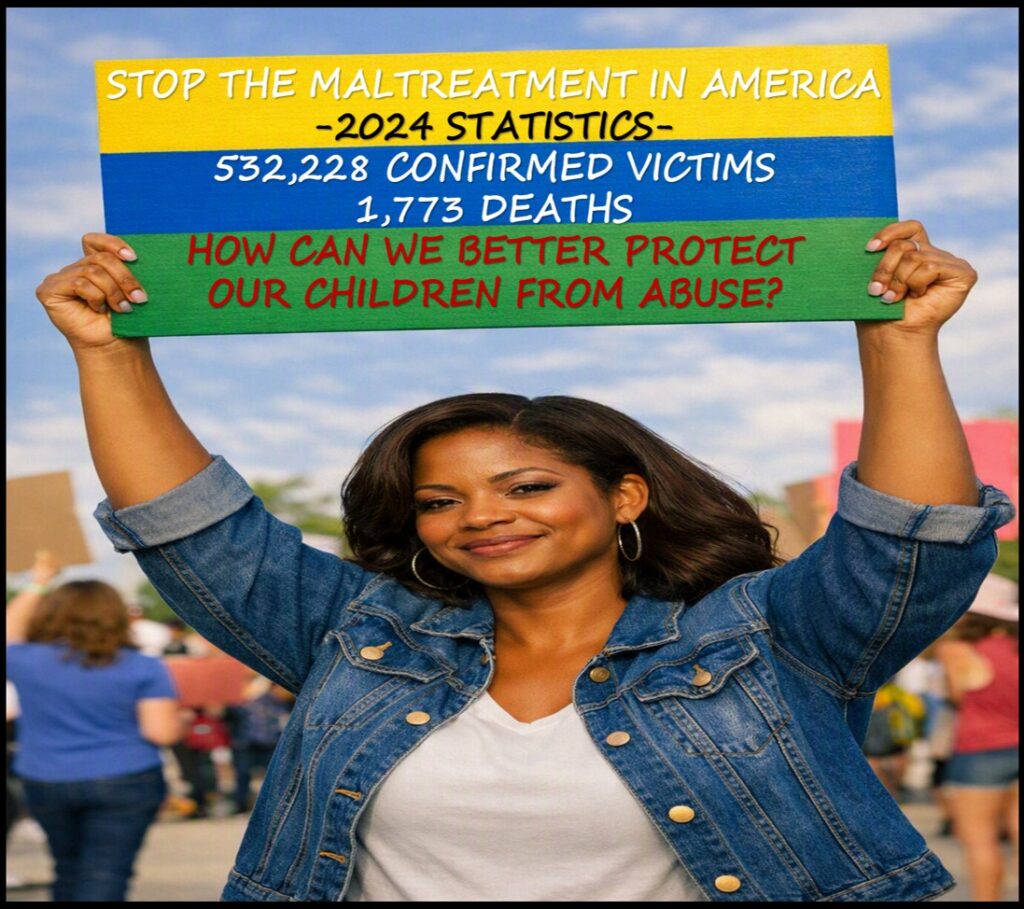
National Child Abuse Awareness Day is dedicated to raising awareness about child abuse and promoting strategies to prevent it. Child abuse remains a serious national concern, and the numbers show why prevention matters. The U.S. Department of Health and Human Services’ Children’s Bureau reported that the federal fiscal year 2024 child maltreatment data included 532,228 children determined to be victims of abuse or neglect. The same federal reporting system identified child fatalities connected to maltreatment, while public summaries of the data report 1,773 child deaths from abuse or neglect. These figures represent known cases that reached child protective systems, which means the true scope of harm may be larger because not every incident is reported or confirmed.
The youngest children are especially vulnerable. Available national fatality data show that infants and toddlers account for a large share of child maltreatment deaths. That should stop every parent or guardian in their tracks. The smaller the child, the less able they are to escape, explain, defend themselves, or ask for help. Your power as the adult must be used as protection, not intimidation.
When children misbehave, are they seeking attention?
Sometimes children misbehave because they are tired, hungry, overstimulated, jealous, bored, scared, or unable to communicate what they need. Sometimes they are seeking attention, but that does not mean they are being manipulative in an adult sense. Attention is a need. Connection is a need. A child who receives attention only when they misbehave may repeat the behavior because negative attention still feels like engagement.
You can reduce attention-seeking misbehavior by giving attention before the child has to demand it. Offer eye contact. Use warm words. Spend ten focused minutes playing without your phone. Notice good behavior out loud: “You waited your turn,” “You used gentle hands,” or “You told me you were angry instead of hitting.” Positive attention helps a child feel secure and loved, and secure children are often more able to accept limits.
How not to over-discipline your child
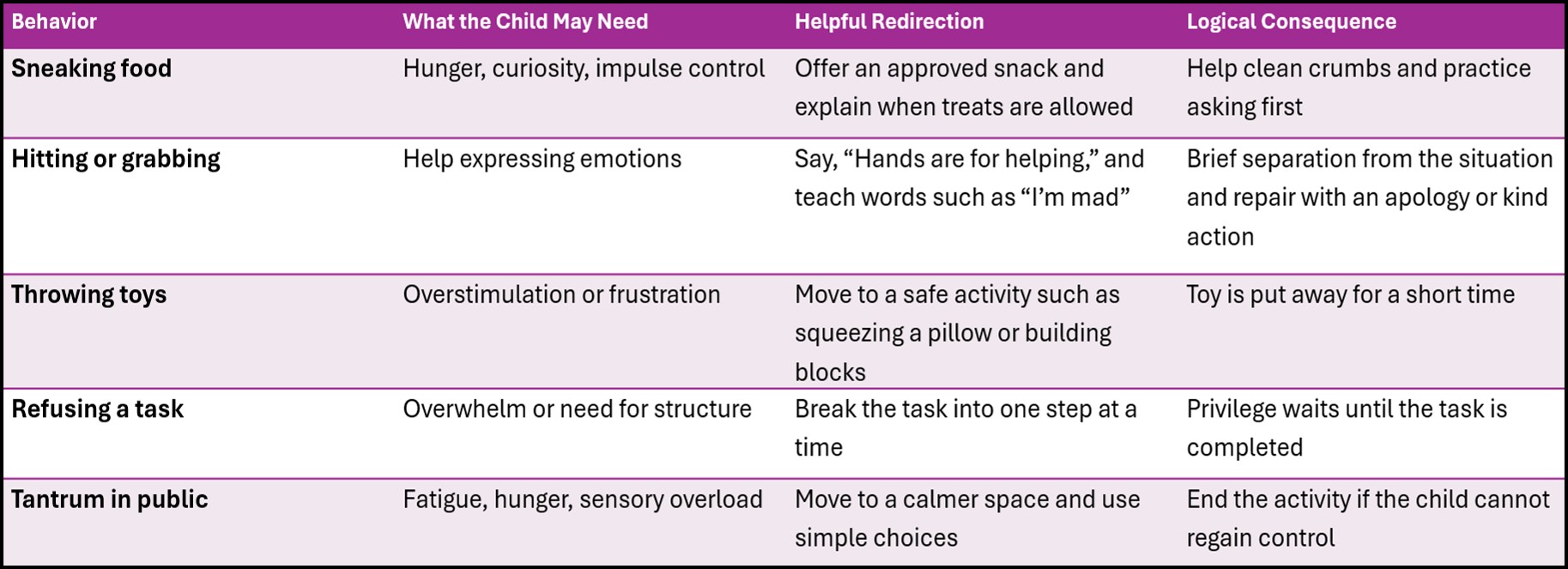
To avoid over-discipline, pause before reacting. Ask yourself what lesson you want the child to learn. If the consequence does not teach that lesson, it may be punishment for punishment’s sake. The punishment should fit the crime or offense. A child who spills milk after being careless can help wipe it up. A child who throws a toy can lose that toy briefly. A child who speaks disrespectfully can be guided to try the sentence again with a calmer tone. The response should be related, reasonable, respectful, and consistent.
Over-discipline often happens when adult emotions take control. If you feel yourself escalating, step back if the child is safe. Take a breath. Lower your voice. Give fewer words, not more. You can say, “I am too upset to talk right now. We will handle this in a minute.” That pause may be the difference between discipline and damage.
Appropriate Redirection Chart
Legal consequences of hurting a child
Hurting a child can carry serious legal consequences. Depending on the injury and local law, a parent or guardian may face investigation by child protective services, loss of custody, supervised visitation, restraining orders, mandatory parenting classes, criminal charges, fines, probation, or incarceration. Severe physical punishment can be treated as assault, child cruelty, or child abuse. Even when an adult claims they were “only disciplining,” the law may look at injury, force, intent, pattern, and the child’s age. No moment of frustration is worth risking a child’s safety or destroying a family through preventable harm.
Developmental consequences of hurting a child
The future developmental consequences can be just as serious as the legal ones. A child who is repeatedly hit, threatened, or humiliated may grow up with anxiety, depression, aggression, low self-esteem, sleep problems, learning difficulties, or trouble trusting caregivers. Harsh discipline can also teach children that bigger people control smaller people through fear. Instead of learning self-control, they may learn survival. Instead of learning responsibility, they may learn shame.
Two public cases remind us why this subject cannot be treated lightly. In Michigan, a federal jury convicted Eugene Walter-George Rantanen of murder and first-degree child abuse after a nineteen-month-old toddler suffered fatal blunt-force head trauma while in his custody. In North Dakota, Kenzie Rose Baker pleaded guilty to child abuse, child neglect, and related charges connected to the death of a one-year-old child whose autopsy described repeated injuries and untreated internal harm. These cases are heartbreaking because they show what can happen when children are not protected from violence inside the spaces where they should be safest.
Alternative reinforcement that works
Positive reinforcement does not mean letting children do whatever they want. It means you teach the behavior you want to see and recognize it when it happens. You can use praise, hugs, extra bedtime reading, sticker charts, special helper roles, or earned privileges. The key is to be specific: “You put the toy down when I asked,” works better than a vague “good job.” You are helping the child connect the action with the positive outcome.
Natural and logical consequences also matter. If a child refuses to wear a coat, they may feel cold and learn why coats help. If a child breaks a crayon by using it roughly, the broken crayon is the consequence. If a child makes a mess, they help clean it. These responses teach accountability without fear.
Resources for overwhelmed parents and guardians
- Call or text 988 if you feel in emotional crisis or afraid you may hurt yourself or someone else.
- Contact the Childhelp National Child Abuse Hotline at 1-800-4-A-CHILD for support and guidance.
- Reach out to your child’s pediatrician for referrals to parenting classes, behavioral specialists, or family counseling.
- Ask your local school, church, community center, or county family services office about respite care and parenting support groups.
- If you need a break, place the child somewhere safe, step into another room, breathe, and call a trusted adult for help.
- If you witness a child being abused, you must report your concerns to your local city’s social service (CPS) department.
Conclusion
You are human, and parenting or caregiving can stretch every ounce of patience you have. But the child in front of you is still learning how to be a person. Your role is not to break their will; it is to shape their understanding, protect their body, and guide their heart. When you choose calm correction over fear, you teach more than obedience. You teach safety, trust, empathy, and self-control.
Let this be the reminder: as parents and guardians, you are meant to help keep children safe so they can grow happy and healthy. A child who feels loved is not spoiled. A child who is guided with patience is not weak. A child who is corrected without violence is a child given room to learn, recover, and become better. The punishment should fit the offense, but the love should always fit the child.
Citations
- Child Maltreatment 2024 | The Administration for Children and Families
- Child Abuse Statistics 2026 Update: Latest Available U.S. Data
- Federal Jury Convicts Man of Murder and First-Degree Child Abuse of a Toddler
- St. Michael Woman Pleads Guilty to Child Abuse and Related Charges in Death of One-Year-Old