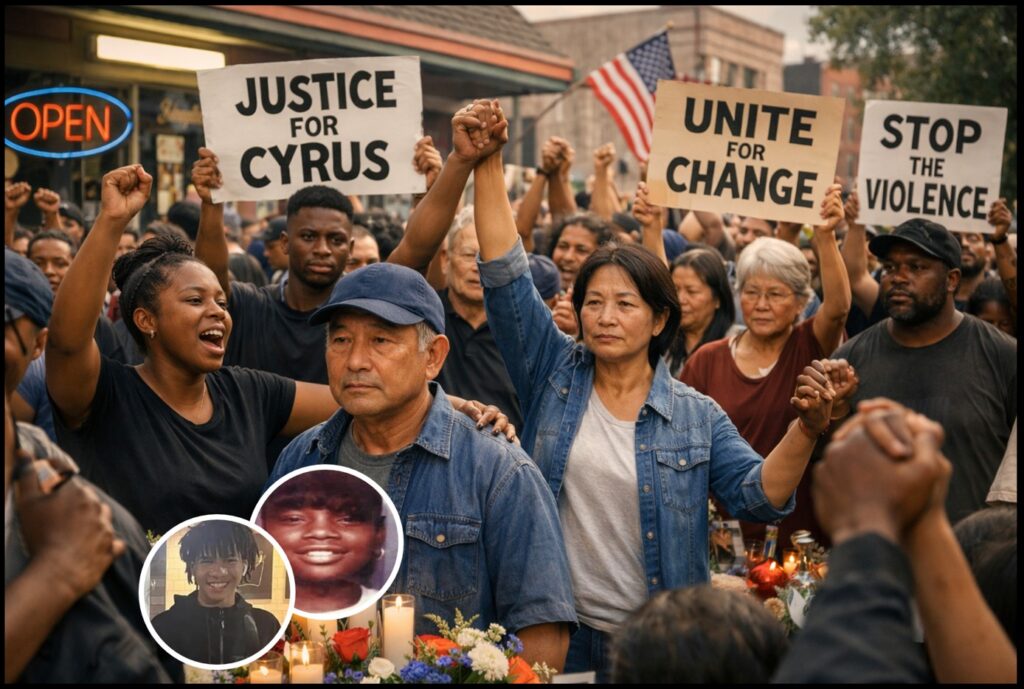
The recent protests following the fatal shooting of 14-year-old Cyrus Carmack-Belton by South Carolina convenience store owner Chikei Rick Chow have brought renewed attention to long-standing tensions between segments of the Black community and some Asian-run businesses. Chow, who alleged that the teenager had stolen a bottle of water, was acquitted on June 1, 2026, after testifying that he believed Carmack-Belton was armed and that his life was in danger. Prosecutors, however, stated that the teenager was fleeing when he was shot. The verdict sparked widespread outrage, deep grief, and renewed demands for accountability, not only in this case, but also in relation to the broader pattern of mistrust and conflict that has persisted for decades.
This tragedy extends beyond a single incident. It reflects the intersection of fear, bias, and power, and illustrates how these forces can shape interactions between marginalized communities. It also raises important questions about how society continues to respond to injustice and how accountability can be pursued without allowing the actions of one individual to define an entire racial or ethnic group.
The Case and Its Impact
In June 2023, Chikei Rick Chow confronted 14‑year‑old Cyrus Carmack‑Belton inside his convenience store after believing the teen had stolen four bottles of water. Surveillance footage later showed that Cyrus had put the bottles back. Despite this, Chow and his son chased Cyrus more than 130 yards from the store. As Cyrus ran away, Chow shot him in the back.
Prosecutors stated there was no evidence that Cyrus had a weapon or posed any threat. Witnesses also confirmed they never saw a gun in the boy’s hands. Although the defense argued that Mr. Chow believed Cyrus had pointed a gun at his son, investigators found no proof to support that claim.
The killing of Carmack‑Belton struck a deep emotional chord. Many Black Americans viewed the case as yet another example of a young Black child losing his life over an accusation that did not justify deadly force. Chow’s acquittal only intensified the pain, reinforcing long‑standing concerns that the justice system often fails to protect Black victims.
At the same time, Asian American communities, especially small business owners, felt the weight of collective blame. Many feared retaliation, vandalism, or being unfairly associated with a tragedy they had no involvement in. This dual grief created a volatile environment where anger, fear, and misunderstanding collided.
Ultimately, the case became a flashpoint for broader conversations about racial tension, implicit bias, and the responsibilities communities hold toward one another.
The Boycott, and Why Some Believe It’s Necessary
In the aftermath, many activists called for a boycott of Chow’s store and other Asian‑run businesses in the area. This would include Chinese Restaurants, Nails Salons, hair supply chains, and any known Asian supermarkets. Some wanted to take the boycott as far as not purchasing anything made from China. For supporters, the boycott is not about punishing an entire race; it is about using economic pressure to demand justice, safety, and respect. Boycotts have historically been a powerful tool for marginalized communities, from the Montgomery Bus Boycott to modern‑day economic protests.
Supporters argue that:
- The store profited from the community while failing to treat the community’s children with dignity and respect.
- Economic pressure is sometimes the only language institutions respond to.
- Boycotts can force conversations about training, accountability, and safety protocols.
However, critics worry that the boycott risks misdirecting anger toward innocent business owners who had nothing to do with the shooting. In Fact, Chow’s store was vandalized even though it was previously sold to pay for the cost of his legal fees. This tension highlights the need for targeted accountability rather than broad condemnation.
The Ongoing Feud Between the Communities
The strained relationship between some Black Americans and some Asian‑run businesses did not begin with this case. It is rooted in decades of economic inequality, cultural misunderstandings, and proximity without true connection.
Many Asian immigrants opened stores in predominantly Black neighborhoods due to lower rent and available commercial space. While these businesses often provided essential goods, the relationships were not always built on mutual trust. Black customers sometimes felt surveilled or disrespected. Asian owners sometimes felt unsafe or targeted. Both groups carried stereotypes about one another’s way of life that were shaped by history, media, and systemic inequality.
This dynamic has led to repeated flashpoints, from the 1991 killing of Latasha Harlins in Los Angeles to more recent conflicts. Each incident adds another layer of hurt, making reconciliation harder.
Understanding this history is essential to breaking the cycle. Communities cannot heal from wounds they refuse to acknowledge. This is why conversations about cross‑racial solidarity matter now more than ever.
Alternative Ways Mr. Chow Could Have Handled the Situation
Even if Chow believed Carmack‑Belton had stolen something, there were many non‑lethal, responsible alternatives available. Deadly force should never be the first response to suspected petty theft.
Here are better options the clerk could have taken. None of them involve violence. All of them preserve life.
- Call law enforcement: Report the incident and allow trained officers to handle it.
- Use store security cameras: Document the alleged theft without escalating the situation.
- Ask the teen to leave: Remove the individual from the premises without confrontation. Ban them from returning to the store.
- Implement theft‑prevention policies: Use signage, mirrors, or staff training to reduce incidents.
- Engage in de‑escalation: Speak calmly, avoid accusations, and prioritize safety.
How the Community Can Hold the Clerk Accountable Without Targeting an Entire Race
Accountability is essential, but it must be precise, not broad. Communities can demand justice without harming innocent business owners. Accountability should uplift the community, not divide it further.
Constructive approaches include:
- Supporting legal appeals or civil suits against the individual responsible.
- Organizing community forums to address safety, bias, and expectations for local businesses.
- Creating community‑business agreements outlining standards for conduct, training, and conflict resolution.
- Encouraging cultural competency training for store owners and employees.
- Supporting Black‑owned businesses as a positive alternative rather than a punitive measure.
- If all else fails, locate the nearest store with the same products: Remember, just like local clerks who have the right to refuse service, shoppers have that same right to spend their money where they feel welcomed and respected. Local businesses are made available to the public and can be closed by the public through boycotting if services aren’t given fairly.
A Call for Shared Humanity
Everyone on planet Earth has the right to exist, work, and thrive in shared spaces. Each of us, in every race, culture, or religion, brings value to the community. Excluding or condemning an entire group because of one person’s actions is not justice; it is a form of prejudice. Black Americans and Asian Americans both carry rich histories, deep cultural wisdom, and valuable contributions that strengthen this country.
If we are ever going to move forward, we must set aside the stereotypes, the inherited mistrust, and the generational hurt. We must choose dialogue over division, accountability over blame, and humanity over hate. Only then can we build communities where every child, Black, Asian, or otherwise, can walk into a store without fear, and every business owner can serve their neighborhood with respect and dignity.