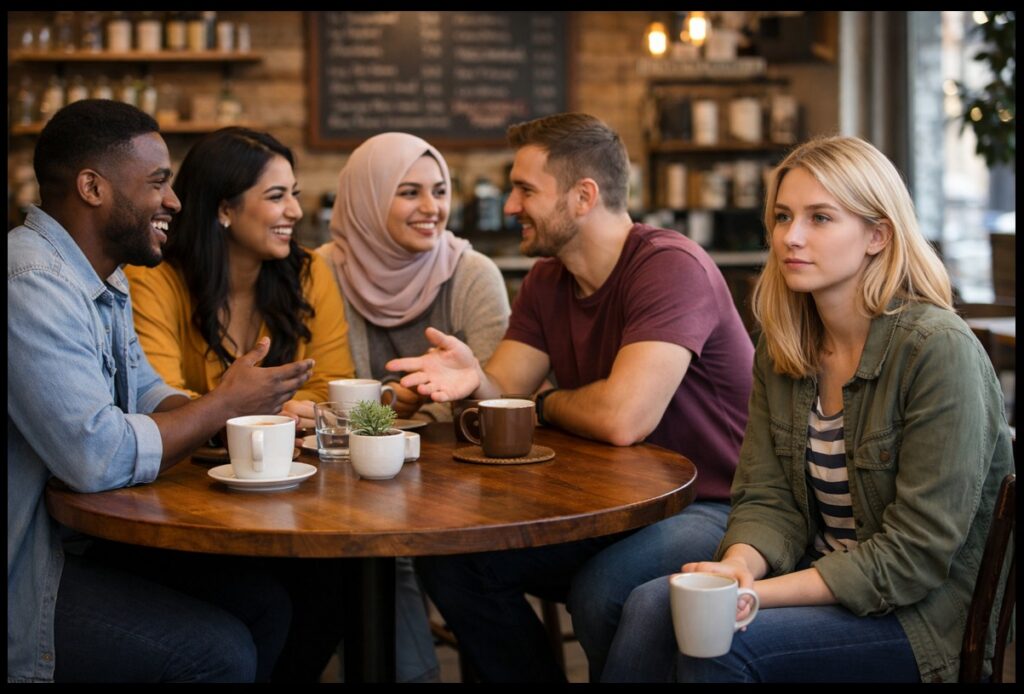
Imagine sitting with your coworkers, enjoying an easy, engaging conversation. The room feels diverse but familiar, and everyone seems connected. Then, without warning, the shared language shifts into something you don’t understand. The laughter continues, the energy stays high, but suddenly, you’re on the outside looking in.
A moment ago, you were part of the rhythm. Now, the words blur into a wall of sound, and you’re left quietly observing a conversation you can’t access. It’s a small shift with a big emotional impact. Language barriers aren’t just about vocabulary; they can instantly shape who feels included and who feels invisible.
This experience is becoming more common in today’s United States, where our communities look less like a melting pot and more like a colorful mosaic of cultures, faiths, and languages. Walk down a single city block and you might hear Spanish, Arabic, Mandarin, or Tagalog drifting from storefronts. Churches, mosques, temples, and synagogues stand side by side. It’s beautiful, vibrant, and full of life, but it also challenges our old assumptions about communication.
And the linguistic landscape is only going to keep shifting. Globally, languages like Mandarin and Hindi continue to grow. Here in the U.S., Spanish is expanding so quickly that by 2050, the country may have the largest Spanish‑speaking population in the world. English will still matter, of course, but it won’t stand alone. Preparing for a multilingual future isn’t optional anymore, it’s essential.
Learning another language isn’t just a skill; it’s an act of connection. It’s a way of saying, “I’m willing to meet you where you are.” When we learn someone else’s language, we learn their humor, their worldview, their rhythm. We step outside our own bubble and make room for someone else’s.
But the flip side is real too. Language can be used to welcome, or to exclude. When people share a common language but switch to another one just to shut someone out, it stings. It sends a clear message: You’re not part of this. Whether it’s done out of pettiness, secrecy, or simple disregard, it creates emotional distance where there could have been connection.
So how do we communicate across cultures, faiths, and languages without losing each other in the process? It starts with patience and cross‑cultural awareness. A warm smile, open body language, and genuine eye contact can bridge gaps that words can’t. Sometimes communication means embracing awkward pauses, asking for clarification, or leaning on translation tools. Technology can help, but human intention is what truly closes the gap.
At the heart of it all, every person wants the same thing: to be seen, heard, and understood. When someone struggles to express themselves in our language, or when we find ourselves lost in theirs, kindness should be our first response. Inclusion means paying attention to who’s drifting to the edges of the room and gently pulling them back in.
When we lead with empathy, language stops being a barrier and becomes a window, one that lets us see the humanity we all share.
Are you interested in Learning Another Language? Here are some resources to take the first step toward breaking down these barriers yourself, Below are excellent digital resources available today:
- Duolingo: Ideal for beginners looking for gamified, bite-sized daily practice to build vocabulary and basic grammar.
- Babbel: Excellent for intermediate learners who want a strong focus on real-world conversations, practical dialogue, and structured grammar explanations.
- iTalki: A fantastic platform that connects you directly with native-speaking tutors worldwide for affordable, 1-on-1 video conversation practice.