Joseph and Jan- A Morning Ritual of Survival
Every morning at a local McDonald’s, a couple, Joseph and Jan (names changed for privacy), arrive just after sunrise. They move with a gentle rhythm, familiar to the staff and regulars. Jan uses a wheelchair, though she can walk short distances with difficulty. Joseph helps her navigate the curb, the door, the line. They wash up in the restroom after another night sleeping in the park, then sit quietly to eat breakfast.
They are the kindest, most humble couple you could ever meet. If you passed them on the street, you would never guess they were homeless. They don’t ask for anything. They don’t complain. They simply exist with dignity, holding onto each other as their last piece of stability in a world that has offered them very little.
Their story is not rare. It is simply unseen.
Connie- Working, Parenting, Surviving
At another table sits Connie (also a protected name), a hardworking substitute teacher and single mother of three young adult children, one of whom has autism. She, too, comes to McDonald’s for breakfast, warmth, and a moment of normalcy. Though she works tirelessly, she considers her family semi‑homeless because she stays in someone’s basement after losing her apartment during COVID when her income collapsed.
She represents a growing population of Americans who work every day, contribute to their communities, and still cannot afford stable housing. Her story is a reminder that homelessness is not always visible, and it is not always what people assume.
Homelessness in America
Homelessness in America has never been a single‑story issue, and since the COVID‑19 pandemic, its complexity has only deepened. Before 2020, the U.S. Department of Housing and Urban Development estimated roughly 580,000 people were experiencing homelessness nationwide. Post‑COVID, with millions losing jobs, facing medical crises, or falling behind on rent, the true number has become impossible to measure. Many people never enter shelters, never appear in official counts, and never disclose their situation. They blend into the workforce, into schools, into everyday life, quietly surviving in the shadows of a system stretched beyond capacity. Let’s compare the pre and post-COVID stats.
Pre‑COVID vs. Post‑COVID Homelessness: What the Numbers Show
Before the pandemic, homelessness in the United States, while already severe, was at least measurable. According to HUD’s Annual Point‑in‑Time (PIT) Count:
- 2019 pre‑COVID- approximately 567,715 people were experiencing homelessness nationwide.
- 2020 the start of COVID- approximately 580,466 people were counted.
These numbers alone were alarming, but they represented only those who could be located and counted in shelters or visible outdoor locations.
After COVID, the landscape changed dramatically:
- 2022: homelessness rose to 582,462 people.
- 2023: the number surged to 653,104, the largest increase ever recorded in a single year.
- 2024: early estimates from state and local agencies suggest the real number may exceed 700,000, but the true figure is unmeasurable.
Why unmeasurable? Because post‑COVID homelessness includes millions who:
- Lost income
- Lost housing
- Moved in with others
- Live in cars, motels, basements, or temporary spaces
- Never enter shelters
- Are never counted in official data
The Housing Crisis: Waitlists That Don’t Move
The lack of affordable housing has created a bottleneck that traps families for years. Many states have waitlists for housing assistance that stretch five to ten years or longer, and some services have permanently closed due to overwhelming demand. Single mom Connie has been on the same waitlist for 13 years and has applied to multiple others; her lottery number is 11,500 out of 1 to 12,00 spots. That means even those who qualify for help often never receive it. For working families, especially those with disabilities, medical needs, or children, this makes basic living nearly impossible. The PIT Count does not capture these “hidden homeless,” meaning the actual number of displaced individuals and families is likely two to three times higher than reported.
What “Homeless” Really Means
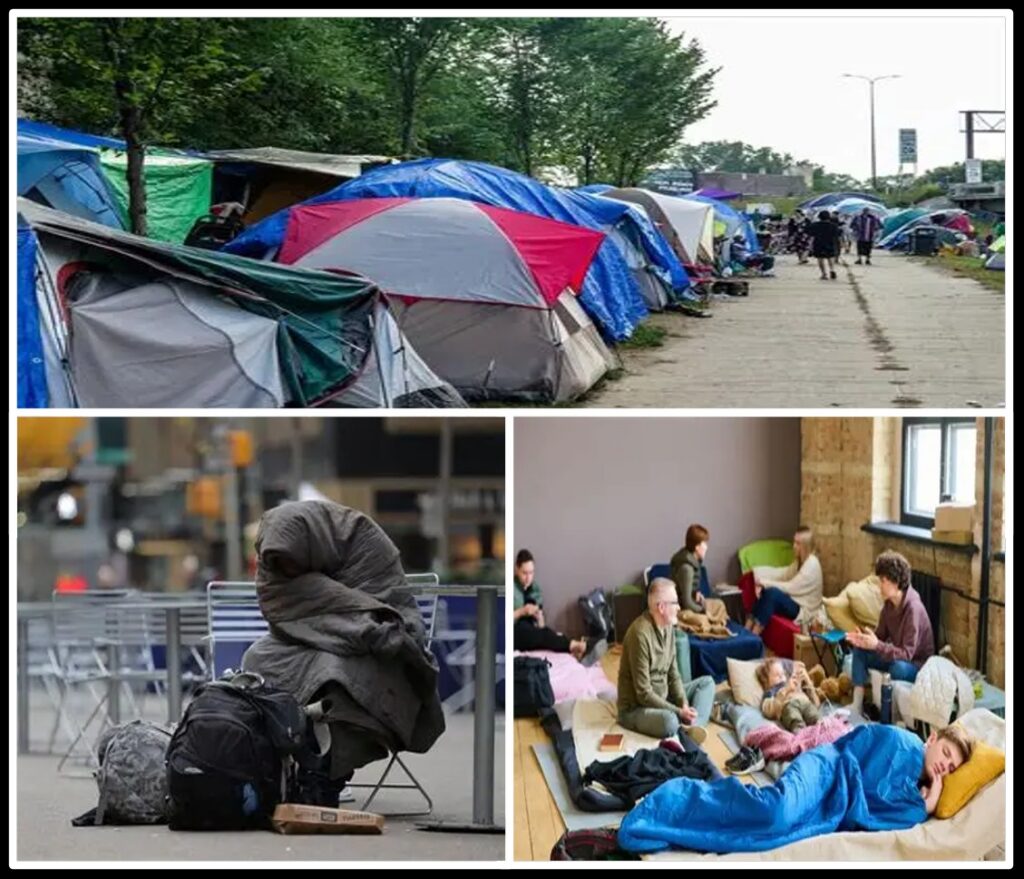
Homelessness is not limited to people sleeping on sidewalks, in parks, or in visible encampments. The federal definition also includes anyone who does not have a fixed, regular, and adequate nighttime residence, which means many people without stable housing may still appear to be functioning in everyday life. This includes people living in shelters, sleeping in cars, vans, or RVs, staying temporarily with friends or family, living in motels because they have no other option, or remaining in unsafe and unstable environments. Some move from place to place without knowing where they will be next, and because their struggle is often hidden, many never identify themselves as homeless and are overlooked by official counts, public awareness, and community support systems. These situations can be especially difficult because people may still be going to work, attending school, caring for children, or managing health conditions while having no secure place to return to at night. Without a stable address, they may also struggle to receive mail, apply for benefits, access medical care, or maintain steady employment. Recognizing these less visible forms of homelessness helps us better understand the full size and seriousness of the crisis, and it reminds us that housing insecurity can exist even when someone does not appear to be living on the streets.
Not Everyone Lives on the Streets
A significant number of homeless individuals are hidden, living in situations that may not look like homelessness to the outside world. Some sleep in cars in Walmart parking lots, live in RVs without heat or running water, rotate between relatives’ couches, stay in basements, garages, or spare rooms, rent motel rooms week to week, or camp in tents in wooded areas. These people are rarely counted, rarely seen, and rarely helped, even though their lives are often marked by the same uncertainty, stress, and lack of safety as those living outdoors. Many are working, caring for children, managing disabilities, or trying to recover from sudden financial hardship while hiding the instability of their living conditions. Because they are scattered across temporary spaces instead of gathered in shelters or encampments, they can easily be missed by outreach teams, public agencies, and official counts. Recognizing hidden homelessness is essential because it reveals how many people are surviving without the security, privacy, and stability that a true home provides.
The Many Faces of Homelessness
Homelessness affects a wide range of people, including those who may look stable from the outside but are privately struggling to survive. It can touch people from every background, education level, age group, and family situation when income, health, housing costs, or sudden crises become overwhelming. Many people experiencing homelessness are doing everything they can to keep working, care for loved ones, and stay connected to their communities despite not having a secure place to live. This is why it is important to look beyond stereotypes and recognize the many different faces of homelessness. Not all homeless individuals struggle with addiction or mental illness. Many are simply victims of economic hardship, rising rents, medical bills, or sudden life changes.
Let’s name a few
- Working adults with full‑time jobs
- College graduates who cannot afford rent
- Disabled individuals with limited mobility or chronic illness
- Elderly adults living on fixed incomes
- Young adults aging out of foster care
- Parents supporting children with disabilities
- People recovering from divorce, illness, or job loss.
- Runaways seeking safety after leaving unstable or unsafe home situations
- Domestic violence survivors seeking safety after leaving unsafe homes
- Veterans struggling to access stable housing and support services
- Families displaced by eviction after sudden rent increases or financial emergencies
How People Survive Day to Day
People experiencing homelessness often depend on everyday public spaces and community services to meet basic needs that many others take for granted. They may use restrooms to wash up, libraries to access the internet, restaurants for warmth and Wi‑Fi, and community centers to charge a phone or find temporary support. Each day requires resilience, creativity, and quiet determination as they continue working, parenting, caring for loved ones, and trying to preserve a sense of dignity while surviving without stable housing.
Here is a list of possible services and spaces used.
- Public restrooms to wash up
- Gyms for showers
- Fast‑food restaurants for warmth and Wi‑Fi
- Libraries for internet access
- Shelters for occasional meals
- Churches for clothing drives
- Community centers for charging phones
- Gas stations for basic hygiene
- Laundromats to wash clothing and stay warm while waiting
- Hospitals and clinics for urgent medical care and referrals
- Public transportation stations for temporary shelter from extreme weather
Ways to Help & Find Resources
Here are practical ways communities can support individuals experiencing homelessness with compassion, dignity, and consistency. Small efforts, such as sharing resources, donating supplies, or helping someone connect with local services, can make a meaningful difference in a person’s daily survival. When communities work together, they create stronger safety nets that help people move from temporary relief toward stability and long-term housing.
- Local shelters: Identify nearby shelters and warming centers.
- Food pantries: Provide groceries and hygiene items.
- Housing assistance: Apply for Section 8, rapid rehousing, or emergency vouchers.
- Disability services: Connect disabled individuals with mobility, medical, and financial support.
- Employment programs: Help with job placement, training, and resume support.
- Community donations: Clothing, blankets, toiletries, and gift cards go a long way.
- Advocacy: Support policies that expand affordable housing and reduce waitlist times.
- Social service sector: Connect with case managers, outreach workers, and local agencies that help people navigate housing, benefits, food, healthcare, and emergency support.
- PROCEED program: Reach out to community-based programs like PROCEED for support with housing resources, Utility Assistance, family services, financial guidance, and connections to local assistance.
- Dial 211: Call 211 to be connected with local resources for shelter, food, rent assistance, mental health services, crisis support, and other essential needs.
A Call to See the Unseen
Homelessness has many faces: Joseph and Jan quietly caring for each other in the morning light; Connie, working hard while holding her family together; and countless others who move through society unnoticed. Their stories remind us that homelessness is not a personal failure. It is a systemic crisis, intensified by a pandemic that reshaped the world and left millions vulnerable.
But there is hope. Every act of awareness, compassion, and advocacy helps. Every resource shared, every voice raised, every moment of empathy brings us closer to a world where no one has to hide their struggle to survive. When we slow down long enough to truly see people, we begin to understand that a warm meal, a safe place to rest, or a kind conversation can mean more than we realize. Communities grow stronger when they refuse to look away and instead choose to respond with humanity, patience, and practical support. The more we recognize homelessness as a shared responsibility, the closer we move toward solutions rooted in dignity, stability, and lasting change.