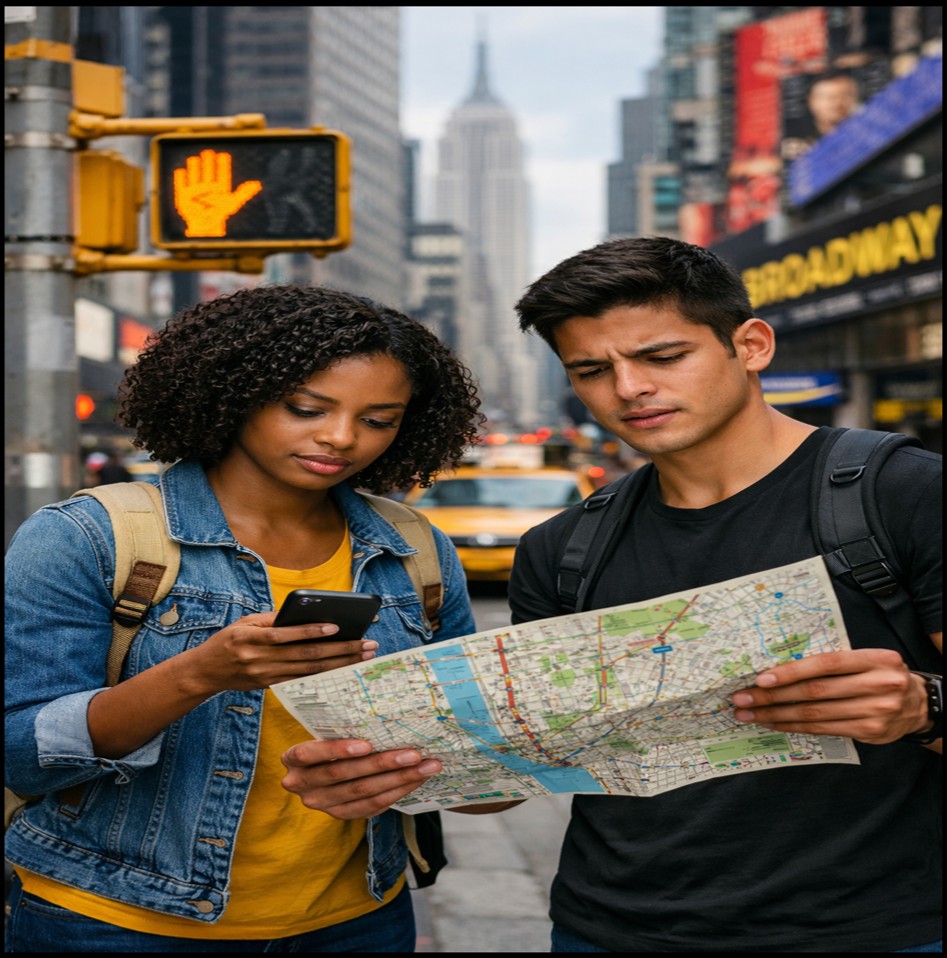
Have you ever been lost? The transition from a protected childhood to independent adulthood is rarely a straight line. More often than not, it involves a series of missed turns, wrong directions, and the sudden, heart-stopping realization that you have absolutely no idea where you are. Getting lost is a universal rite of passage, but how we respond to that moment of panic shapes the adults we eventually become.
Consider the contrasting experiences of Jean and Nita, two young women who recently faced the sudden disorientation of being entirely out of their depth.
Two Paths into the Unknown
Jean’s morning started with the nervous excitement typical of a college student heading to campus. She had her backpack, her schedule, and a mental map of the route. However, in the bustling chaos of the morning rush at the transit hub, she stepped onto the wrong bus. By the time the urban scenery began to fade into unfamiliar highways, a cold knot of panic formed in her stomach. The bus wasn’t heading to her campus; it was bound for an entirely different city, miles away from her destination.
Overwhelmed by the unfamiliar surroundings and the ticking clock, Jean spiraled into a full panic. She did what many of us instinctively want to do when the world gets too big: she called her mother. Hearing the terror in her daughter’s voice, her mom dropped everything, left work early, and drove across county lines to rescue her. Jean made it back safely, but the experience left her shaken and deeply aware of her own vulnerability.
Meanwhile, Nita was facing her own transit trial. Planning a trip from New Jersey to New York City, Nita boarded a commuter train. Somewhere amidst the screeching tracks and multiple passengers stepping on and off the train at their perspective destination, she missed her stop and found herself completely turned around in a massive, crowded terminal. The sheer volume of people and the maze of platforms were dizzying.
Instead of letting panic freeze her, Nita took a deep breath. She looked around, spotted a uniformed transit officer, and approached them. Armed with clear directions and a restored sense of confidence, Nita made it to the correct platforms, boarded the train, and made it home safely. Same predicament, two entirely different outcomes.
The Crucial Shift to Self-Reliance
As children and young adults begin to travel without their parents, they must learn how to actively navigate their environment rather than just passively riding along. For the first two decades of life, coordinates are largely managed by adults; parents act as the ultimate human GPS, handling the tickets, timing, and mapping. Shifting into independent travel requires a psychological upgrade. It demands that young people develop “situational awareness”, the practice of paying attention to landmarks, reading signs, understanding transit maps, and maintaining a mental anchor of where they came from. Learning to navigate isn’t just about reading a map; it is about building the psychological resilience to handle the unexpected when a map fails.
From Paper Maps to the Digital Age
This process of learning to navigate looks completely different today than it did for previous generations. We live in an era dominated by technology and smartphones, where a glowing blue dot on a screen tells us exactly where we stand at any given microsecond. It is easy to forget that “back in the day,” managing a daily travel routine meant relying entirely on physical paper maps, local landmarks, and word-of-mouth directions from gas station attendants or passersby. If you took a wrong turn decades ago, you couldn’t rely on an algorithm to automatically recalculate your route; you had to read road signs, pull over, and mentally puzzle your way out. While smartphones have made travel infinitely more convenient, they have also made us passive travelers, leaving us incredibly vulnerable the moment a battery dies or a cellular signal drops.
Modern Safety and High-Stakes Realities
However, navigating the modern world involves much higher stakes than just missing a bus connection. Staying safe while traveling has become increasingly difficult, especially with global awareness rising around the stark reality that human trafficking remains a severe threat to vulnerable, distracted, or lost young people. Predators often look for individuals who seem disoriented or glued to their phones, completely oblivious to what is happening around them.
Because of this, you must always maintain strict mindfulness of your surroundings, keep your head up, keep your ears free of headphones in unfamiliar areas, and project an air of confidence even if you feel lost.
Furthermore, knowing who not to trust is just as critical as knowing who to approach. You should never ask for help from lone individuals lingering in dark or isolated areas, people who aggressively volunteer to guide you down an alley or into an unmarked vehicle, or strangers who try to isolate you from a crowd by offering a private, unofficial ride. If someone approaches you insisting they know a “shortcut,” politely decline and move toward a well-lit, populated space.
**Getting lost is not a sign of failure; it is the exact moment that real learning begins **
A Toolkit for the Lost Traveler
When you find yourself in unfamiliar territory, your best tool is preparation. Panic impairs logic, so having a structural routine to fall back on can keep a minor detour from becoming a major crisis.
Here are the essential strategies to navigate your travels safely:
- Pre-Load Your Data: Before leaving, download offline maps of your destination. Smartphones are great, but cellular dead zones and dying batteries are a reality.
- The “Stop and Breathe” Rule: If you realize you are lost, do not keep walking aimlessly. Pull off to the side, into a store, a cafe, or against a wall, and assess your situation calmly.
- Keep a Backup Battery: Always travel with your charger or an extra portable power bank. A dead phone dramatically increases the anxiety of being lost.
- Share Your Itinerary: Always let someone know your general route and expected arrival time.
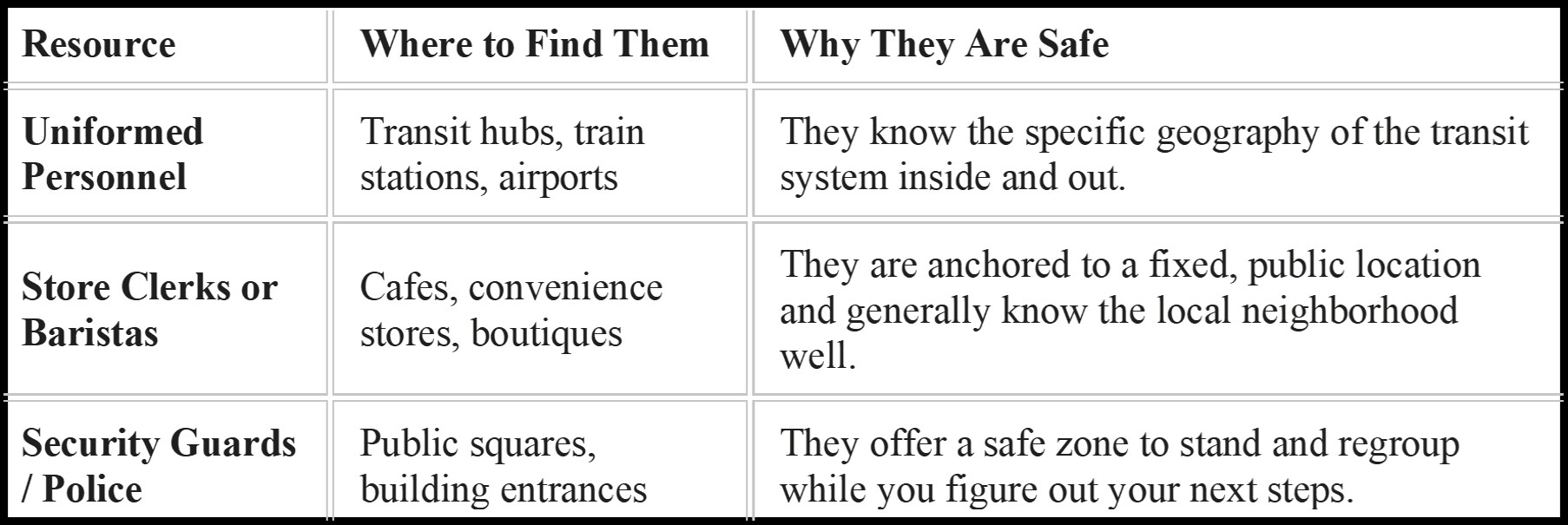
Who to Trust When You Need Help:
If you need to ask for directions, be intentional about who you approach. Instead of randomly stopping strangers on a dark street, look for these reliable sources:
A Note from Home
Dear young adult, stepping out into the world as a first-time traveler without your parents is the most exciting yet terrifying thing you will ever do. The roads out there are wider, faster, and much more complicated than the streets around your neighborhood. There will be days when you catch the wrong bus, miss a train, or feel completely swallowed up by a city that doesn’t care about your schedule.
Know that you will find your own way, as Nita did. You have to build the muscle memory of rescue, to learn that you are smart enough, brave enough, and capable enough to ask the right questions, stay alert, and figure it out. Growing up means learning to pilot your own ship through stormy waters.
Just remember, if the night gets too dark, if the panic gets too loud, or if you need a safe harbor to regroup, you can always call for help. Calling isn’t a sign that you failed at growing up; it just means you need a temporary pit stop. No matter how far you wander, how badly you get turned around, or how many wrong turns you take, you can always call home.