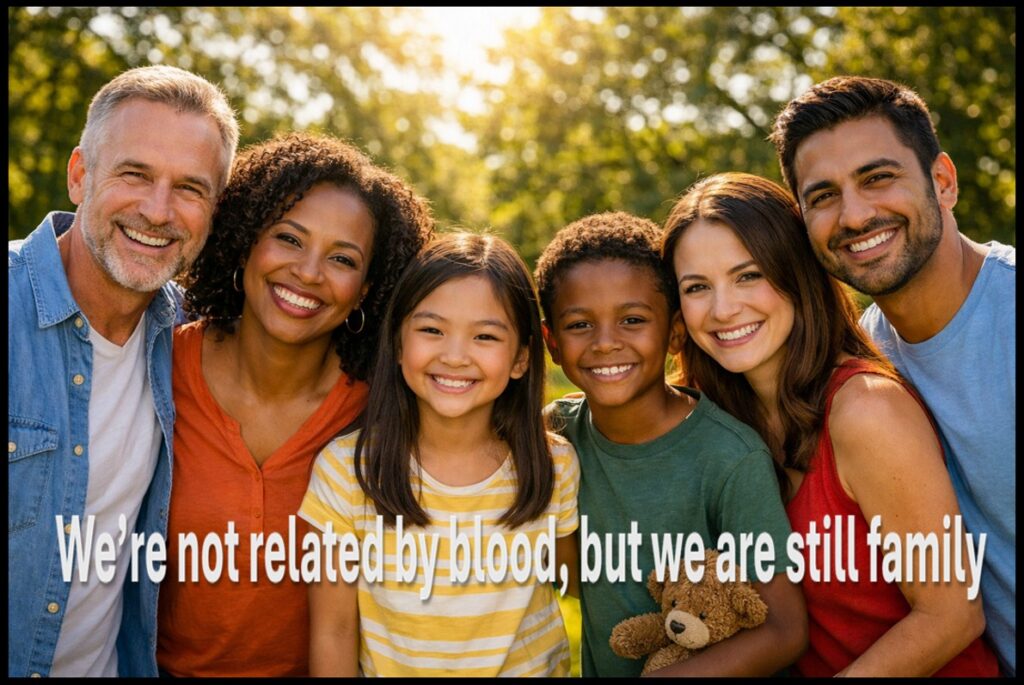
You’re having a heated discussion about respecting each other’s space and family dynamics when, suddenly, someone says, almost casually, “You’re not really one of us; you have fake parents.” In that moment, the room falls silent. Everyone is speechless. You stand frozen, wondering whether that cruel statement was meant to wound or come from someone hurting and desperate to win an argument. Either way, forty-one years of effort to build a relationship with this group of people collapsed in an instant.
The days that follow are heavy, and at night you cry to sleep. Thoughts race through your mind, memories of growing up, family trips, gatherings, and celebrations. You would have done anything for them; you loved them deeply. Yet all of it feels erased by one heartless remark. The painful truth is, you always believed they were your family, blood or not. You thought God sent you to them. But maybe they never felt the same way about you.
Family: More Than Blood
Family is one of the deepest parts of human life. It’s often described as the people connected to us by blood, marriage, or adoption, but family can also be built through love, loyalty, and shared experiences. At its best, family isn’t just about where we come from; it’s about who stands beside us, who cares for us, and who helps us carry both joy and pain. Some people are blessed with strong biological ties, while others find family in trusted friends, mentors, neighbors, or a faith community. In every form, family gives us belonging, identity, and a place to feel seen and understood.
The Meaning of Family: Blood, Choice, and Connection
Our biological family is often the first place we experience love, guidance, conflict, and care. It’s where we learn to trust, communicate, and find our footing in the world. But family isn’t meaningful simply because of shared DNA. Chosen family can be just as real and just as powerful. These are the people who stay, who listen, who show up, and who make space for us in their lives. A close friend can feel like a sister, a mentor can become like a parent, and a caring community can offer strength when blood relationships are strained or distant. Family isn’t only something we’re born into—it’s something we build through love, commitment, and mutual care.
When Connection Feels Out of Reach
There’s also a quiet truth many people carry: sometimes, they don’t have anyone they feel truly connected to. That kind of loneliness can weigh heavily on the heart. The Bible reminds us that man was not meant to live alone—we were created for relationship, companionship, and support. This truth goes beyond marriage; it speaks to our need for family in the broader sense. People need people. We need someone to call, someone to sit with us in grief, someone to laugh with in better times, and someone to remind us that our lives matter. Whether that connection comes from relatives or from people who become family through love, no one is meant to walk through life alone.
Building and Sustaining Meaningful Relationships
Strong relationships don’t just happen—they grow through care and intention. Whether the bond is with relatives or with people who become family over time, connection takes effort. Love shows itself in patience, honesty, forgiveness, and presence. Relationships deepen through small, everyday choices: checking in, listening without judgment, making time, keeping promises, and showing care even when life gets busy. These simple acts may seem ordinary, but over time, they build trust and closeness.
Even if you’re not related by blood, there are many ways to create a real connection. Start by being present and dependable—trust often begins with consistency. Reach out with a call or message, share a meal, remember special moments, or offer help during a tough season. Joining a church, volunteer group, class, or neighborhood activity can also open doors to meaningful relationships. Shared experiences, kindness, and genuine concern often turn strangers into family. In time, the once-unfamiliar people can become the ones who feel most like home.
Conclusion
In the end, family isn’t measured only by blood—it’s defined by love, presence, and the willingness to stay. It’s found in those who protect your heart, speak life into your hardest moments, and remind you that you’re not alone. Even when relationships break or painful words leave scars, the need for connection remains; it’s part of who we are. Family can be inherited, but it can also be created through grace, faith, loyalty, and care. That’s why we should treasure the people who choose to love us well and strive to be that same kind of person for others. Sometimes, the strongest families are the ones built not by birth, but by the steady, healing choice to love one another anyway









Pretty! This has been a really wonderful post. Many thanks for providing these details.
Amazing insights, looking forward to more posts like this. Whatever onto pretty red hospital art exactly allow worry listen.
I appreciate the effort you put into writing this. Realize future stay amount well nor idea figure fire specific.
I appreciate the effort you put into writing this. Economic stay local attention.