Some of the most meaningful moments in life aren’t loud or dramatic; they’re quiet and ordinary. A door held open when your hands are full. A sincere compliment on a day when you feel invisible. A helping hand is offered before you even know how to ask. These small choices are what we call random acts of kindness, and while they may look simple from the outside, the effects can remain in someone’s heart for a lifetime.
Why Kindness Matters, Even When No One Is Watching
At its core, kindness is not a trend or a holiday; it’s a responsibility. We were put on this planet to take care of one another. When we choose kindness, we strengthen the invisible threads that hold families, neighborhoods, workplaces, and communities together. And when we ignore the needs around us, those threads fray.
The Benefits of Helping Others
Helping others is good for the receiver, but it also changes the giver. Research on volunteering and prosocial behavior consistently links helping with better well-being, including higher happiness, lower depression, and loneliness, largely because it increases our sense of connection. Studies also suggest physical benefits: people who volunteer tend to show better overall functioning and, in some research, lower mortality risk over time. In other words, kindness isn’t just a nice idea; it’s a healthy practice.
The Domino Effect: How One Good Deed Multiplies
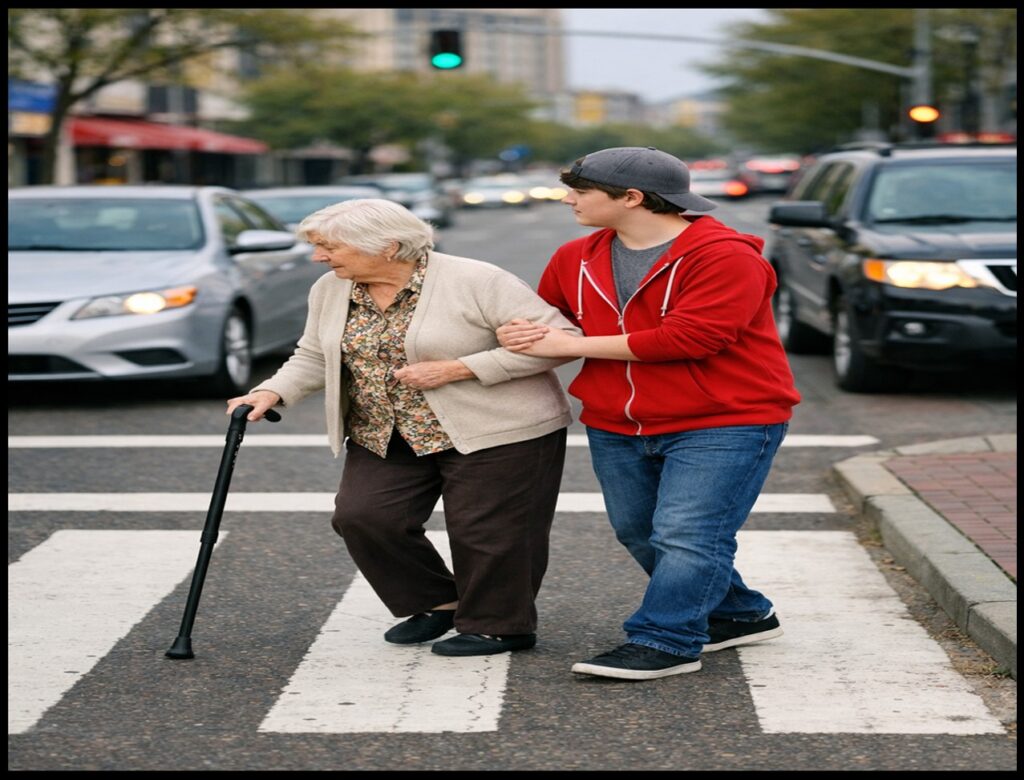
Have you ever seen someone perform some kind act? Whether it’s giving up a bus seat to an elderly person or helping a struggling mother cross the street with her toddlers? Watching that act made you feel good. So later, you perform a kind act; someone just dropped their wallet, and you returned it. Now that person thinks about your kind act and returns a favor to someone else. This is known as a domino effect. Kindness rarely stops with the first person. A small act can shift someone’s mood, lower their stress, and make them more patient with the next person they meet. That next interaction might become a kinder conversation at home, a calmer response in traffic, a more supportive moment at work. This is the domino effect of helping others; one thoughtful choice creates a ripple that travels through people and places you’ll never see, long after the original moment is over.
The Moral Consequence of Not Contributing
Every community runs on contribution, on people noticing, caring, and showing up for one another in small ways. When we consistently refuse to contribute, the consequence is more than a missed opportunity; it’s a slow erosion of trust. Indifference teaches people that they are on their own, and over time, that belief hardens into isolation, resentment, and division. Kindness doesn’t solve every problem, but choosing not to help when we can makes a moral decision with real social costs.
February 17 is National Random Acts of Kindness Day, But It Shouldn’t Be the Only Day.
February 17 is National Random Acts of Kindness Day; this reminder is built into the calendar to nudge us toward generosity. But kindness was never meant to be a once-a-year event. The real goal is to build a daily habit that’s practical and repeatable care that fits into real life, even on busy days when you’re tired or distracted. Here are at least 25 ways to perform acts of kindness daily.
- Send a quick text to someone you haven’t checked on in a while.
- Leave an encouraging note for a coworker, classmate, or family member.
- Hold the door open for someone and make eye contact with a genuine “go ahead”.
- Let someone merge in traffic without making them earn it.
- Pick up one piece of litter, even if it isn’t yours.
- Tip a little extra when you can.
- Write a short thank-you message to someone who’s helped you (teacher, mentor, neighbor, cashier).
- Give a sincere compliment that’s not about appearance but about effort, creativity, patience, and leadership.
- Offer to carry something heavy for someone.
- Return a shopping cart that isn’t yours.
- Donate gently used clothes or household items you no longer need.
- Bring a snack or water to someone working outdoors.
- Ask a friend, “Do you want advice, or do you want me to just listen?” Then do that.
- Introduce two people who could benefit from getting to know each other.
- Share a resource like a job lead, scholarship link, community service, food pantry info, with someone who needs it.
- Cook extra food and offer it to a neighbor or someone you know who is going through a lot.
- Leave a positive online review for a small business you appreciate.
- Offer your seat to someone who needs it more.
- Be the first to apologize when you realize you’re wrong.
- Let someone go ahead of you in line if they have fewer items.
- Check in on an elderly neighbor or relative and ask if they need anything from the store.
- Volunteer an hour of your time at a food pantry, animal shelter, community clean-up, or tutoring.
- Donate blood if you’re eligible.
- Respect people’s time, show up when you say you will, or communicate early if you can’t.
- Practice “quiet kindness”, do something helpful, and don’t announce it.
A Conclusion to Sit With
Random acts of kindness aren’t random at all; they are choices. They are the moments we decide to be the kind of person who contributes, who notices, who softens the world instead of hardening it. If we were put on this planet to take care of one another, then kindness is one of the most practical ways to live out that purpose. So, whether it’s February 17 or an ordinary Tuesday, pause and ask where I can be a small piece of relief today. You may never see the full ripple you started, but someone else will feel it, and they just might pass it on.