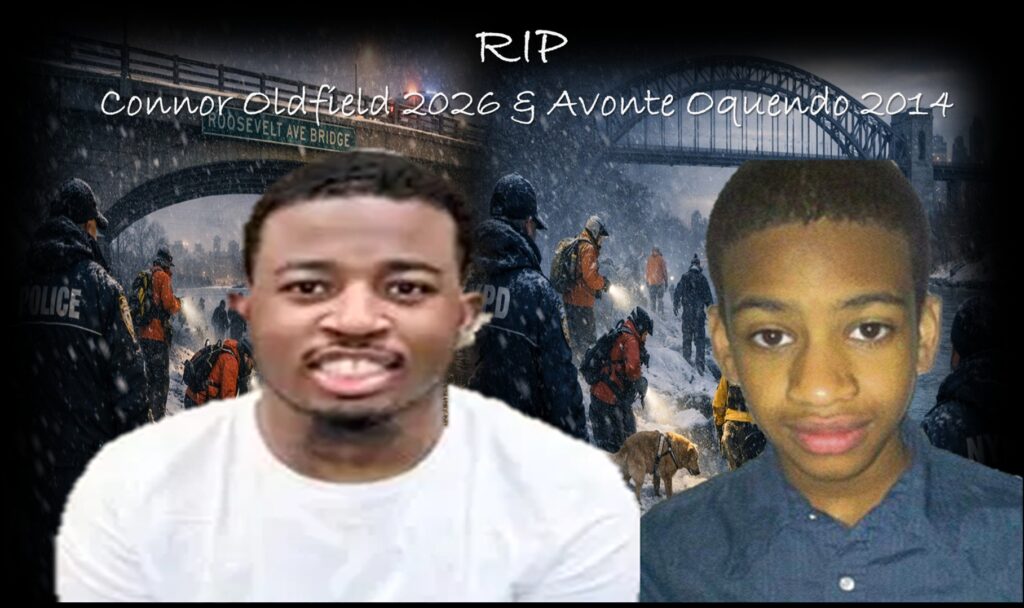
The disappearance of 19‑year‑old Connor Oldfield sent shockwaves through the Plainfield, New Jersey, community. Connor, a young man with autism known for his gentle nature and close bond with his family, was last seen leaving his home on January 24, 2026. His unexpected departure was captured on the family’s home surveillance system, leaving relatives and neighbors desperate for answers. Within hours, a massive search effort began, unfolding in bitter winter weather as volunteers, law enforcement, and community members worked side by side, refusing to give up hope.
That same night, conditions took a dramatic turn. A major winter storm, forecasted to drop more than 10 inches of snow, swept into the region. By the early morning of January 25, heavy snowfall had already blanketed the area. Visibility dropped sharply, potential tracks and clues were quickly buried, and freezing temperatures made the search increasingly dangerous. Despite these challenges, teams continued working through the storm, with city and county agencies coordinating snow removal and missing‑person operations simultaneously. Social media helps with the search by reposting Connor’s image, in hopes that someone has seen him to contact the police.
After weeks of searching, the investigation reached a heartbreaking conclusion. On February 19, 2026, authorities located Connor in Green Brook, New Jersey, near the Roosevelt Avenue bridge on the Plainfield, North Plainfield border. His home in Plainfield was approximately one mile from the site where he was found, a distance that typically takes 15 to 20 minutes to walk, depending on the exact starting point. Because he was last seen heading toward the area where the brook runs, and since the brook flows from Plainfield into Green Brook, the location of his recovery aligns with the natural path of the waterway. Investigators had obtained video evidence showing Connor entering the brook on the day he disappeared and becoming fully submerged. His body was later recovered beneath the ice after emergency crews broke through the frozen surface.
A Familiar Story of Avonte Oquendo
Avonte Oquendo was a 14‑year‑old autistic boy from Queens, New York, whose disappearance captured national attention. On October 4, 2013, he wandered away from Riverview School in Long Island City, walking past the security desk and leaving the building unnoticed. Avonte was nonverbal and had a history of wandering, which made the situation especially urgent. His disappearance prompted one of the largest search efforts in New York City history, involving police, volunteers, subway workers, and marine units who searched tirelessly for months.
Tragically, Avonte’s remains were discovered on January 21, 2014, along the East River, bringing the search to a heartbreaking end. His case sparked widespread conversations about the safety of autistic students, particularly those prone to elopement, and highlighted serious gaps in school security protocols. In response, lawmakers introduced “Avonte’s Law,” aimed at improving school safety measures and implementing tracking systems to better protect vulnerable children.
The unfortunate side of being disabled
People with disabilities, whether autistic, nonverbal, or physically disabled, often face profound challenges navigating their communities. Many rely on caregivers, school staff, or support workers to help them move safely through environments that are not designed with their needs in mind. Everyday tasks such as crossing busy streets, interpreting social cues, or responding to unexpected situations can become overwhelming without proper assistance. These vulnerabilities are especially pronounced for individuals who cannot communicate danger, ask for help, or advocate for themselves in moments of confusion or distress.
Unfortunately, gaps in supervision and support remain a widespread issue. Disabled individuals are sometimes poorly supervised, left without adequate assistance, or expected to manage situations far beyond their capacity. Studies show that nearly 50% of autistic children attempt to wander or elope at least once, and many do so because they are overstimulated, anxious, or simply curious. When supervision is inconsistent or when caregivers are stretched thin, these risks increase dramatically. For physically disabled individuals, a lack of mobility support or inaccessible environments can leave them stranded, isolated, or unable to reach safety during emergencies.
These dangers often intensify as disabled individuals reach adulthood. Services available during childhood, such as school aides, structured routines, and mandated supervision, often disappear once they turn 18 to 21 years of age and transition out of the school environment. Adults with disabilities are statistically more likely to become lost, injured, or exploited due to reduced oversight and limited community resources. Research indicates that 1 in 3 adults with developmental disabilities experience a serious safety incident, often linked to inadequate support or a lack of trained caregivers. Without strong systems in place, many are left to navigate a world never built with their needs in mind, increasing the risk of harm and underscoring the urgent need for better protection.

How can we help
Strengthening protections for individuals with disabilities begins with acknowledging that wandering, confusion, and difficulty navigating unsafe environments are not rare events; they are predictable risks that require proactive systems. Policies like Avonte’s Law, created in response to the disappearance of Avonte Oquendo, demonstrate how legislation can drive meaningful change. The law supports funding for tracking technology, improved school safety protocols, and better training for staff responsible for supervising vulnerable students. Expanding similar protections nationwide would help ensure that autistic, nonverbal, and physically disabled individuals are never left without safeguards that match their needs.
Alert systems also play a critical role in preventing tragedies. While AMBER Alerts are designed for abducted children, other alert types, such as Silver Alerts for missing older adults and Ashanti Alerts for endangered adults, show how targeted notifications can mobilize communities quickly. However, there is still a gap for disabled teens and adults who wander or become disoriented. Advocates have long argued for a dedicated alert category for missing individuals with developmental disabilities, regardless of age, to ensure rapid public awareness and coordinated search efforts. A disability‑specific alert system could save lives by recognizing that vulnerability does not end at childhood.
Improving protections also requires consistent, high‑quality supervision and support. Many disabled individuals, even those considered “mild” or “high‑functioning”, struggle with judgment, sensory overload, or navigating unfamiliar places. Yet they are often expected to manage independently without the assistance they truly need. Studies show that nearly half of autistic individuals attempt to wander, and the risk increases significantly in adulthood when school‑based supports disappear. Strengthening caregiver training, ensuring adequate staffing in schools and group homes, expanding community‑based services, and providing families with respite and behavioral support can dramatically reduce the likelihood of someone becoming lost or harmed. Protecting disabled individuals means building systems that do not leave them to fend for themselves but instead surround them with the structure, supervision, and dignity they deserve.
Conclusion
Protecting vulnerable individuals with disabilities requires more than reactive measures; it demands a coordinated, compassionate system that recognizes their unique needs and ensures they are never left without support. The heartbreaking losses of Avonte and Connor show how quickly a moment of confusion, overstimulation, or unsupervised time can turn into tragedy. Strengthening safety protocols, improving community awareness, and expanding disability‑specific alert systems are essential steps toward preventing future disappearances. Policies like Avonte’s Law demonstrate that meaningful change is possible when lawmakers, schools, and families work together to prioritize the safety of those who cannot always advocate for themselves.
As communities continue to learn from these cases, the focus must shift toward proactive protection: consistent supervision, trained caregivers, accessible environments, and rapid‑response systems that activate the moment a vulnerable person goes missing. Every individual, whether nonverbal, autistic, physically disabled, or high‑functioning, deserves a world where their safety is not left to chance. If you would like to learn more about the different missing alerts, see the links below.
Reference Links:
Below is a clear, concise summary of the major U.S. missing‑person alert systems and the key law connected to disability‑related wandering. Each entry includes what it is, when it was created, and a source link for further reading.
-AMBER Alert (1996)
The AMBER Alert system was created in 1996 after the abduction and murder of 9‑year‑old Amber Hagerman. It is used to rapidly alert the public about abducted children under 18 who are believed to be in immediate danger.
Learn more: https://en.wikipedia.org/wiki/Amber_alert en.wikipedia.org in Bing
-Silver Alert (2005–2009, state‑by‑state)
Silver Alerts are designed to locate missing seniors with dementia, Alzheimer’s, or cognitive disabilities. The first statewide programs began emerging between 2005 and 2009, with Oklahoma formally establishing its Silver Alert program in April 2009.
Learn more: https://en.wikipedia.org/wiki/Silver_Alert en.wikipedia.org in Bing
-Ashanti Alert (2018)
The Ashanti Alert Act was signed into law on December 31, 2018. It fills the gap between AMBER Alerts (children) and Silver Alerts (seniors) by creating a national alert system for missing adults ages 18–65 who are endangered.
Learn more: https://www.congress.gov/bill/115th-congress/house-bill/5075 congress.gov in Bing
-Kevin and Avonte’s Law (2018)
Passed on March 23, 2018, Kevin and Avonte’s Law provides federal funding for tracking technology, training, and programs thttps://amzn.to/4sSNmDBo help prevent wandering among individuals with autism, developmental disabilities, or dementia. It was named after two autistic boys—Kevin Wills and Avonte Oquendo—who died after wandering.
Learn more: https://www.autismspeaks.org/advocacy/kevin-and-avontes-law autismspeaks.org in Bing